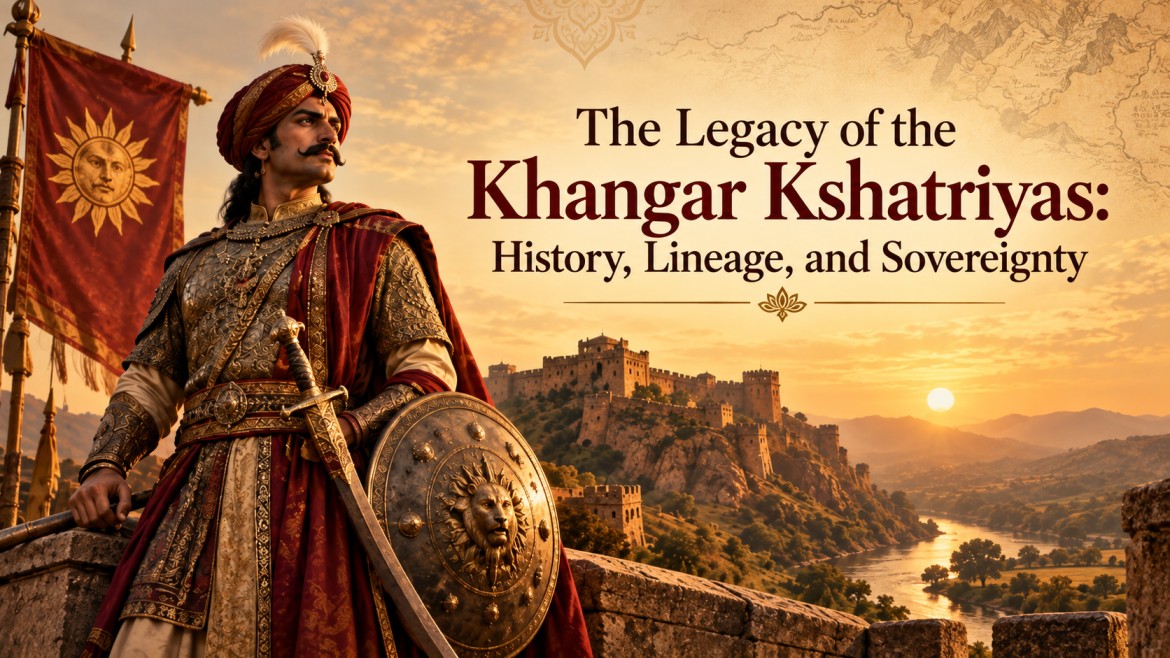
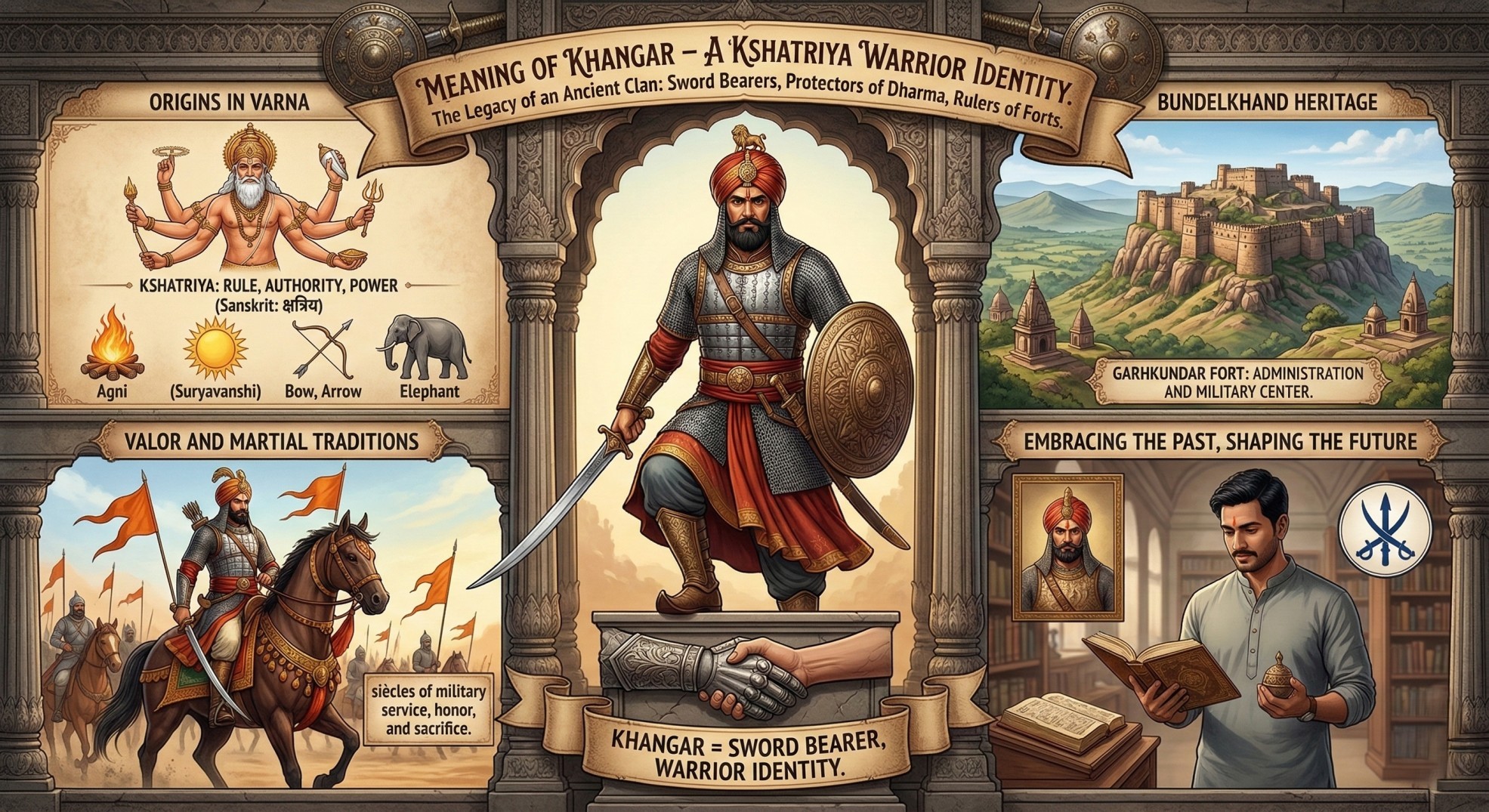
The Khangar Kshatriya community represents a distinguished and valorous chapter in Indian history. Deeply rooted in the heartland of Bundelkhand and tracing ancestral connections to western India, this clan has long been recognized for its martial spirit, sovereign governance, and adherence to Kshatriya traditions. To understand their history is to explore a legacy of strategic defense, architectural marvels, and unbroken cultural identity.
Etymology: The Bearers of the Sword
Documented Fact: The very name of the community reflects its martial origin. Etymologically, the term khangar is derived from two Sanskrit words: Khadga, meaning "sword," and Dhara, meaning "bearer" or "one who holds." Combined, they form Khadgadhara, which transitioned over time into the name we know today, signifying "the bearer of the sword." This title was historically associated with warrior lineages entrusted with defense, governance, and the protection of their territories.
The Chandravanshi Lineage and Chudasama Connection
Documented Fact: Historical records trace the lineage of the clan directly to the Chandravansh (the Lunar Dynasty), the ancient royal line associated with Lord Krishna. This lineage flows down to the Chudasama dynasty of Saurashtra (in modern-day Gujarat), who ruled from the prominent Uparkot fortress at Junagadh from approximately the 9th century to the 15th century. Prominent Chudasama rulers recorded in history include Ra Graharipu (the founder of the Chudasama state), Ra Khengar II (who ruled from 1098 to 1125 AD and fought against Siddharaj Jaisinh), Ra Noghan III (r. 1125–1140 AD), and Ra Kawat II (r. 1140–1152 AD).
Traditional Account: According to traditional genealogical chains preserved by bardic genealogists (Vahivancha records), the lineage connects Lord Krishna to the Chudasama rulers of Junagadh, leading to Ra Kawat II (referred to in records as "Raja Katav-2"), whose son was Maharaja Khet Singh Khangar, the founder of the Bundelkhand dynasty.
Maharaja Khet Singh and the Rise of Garh Kundar
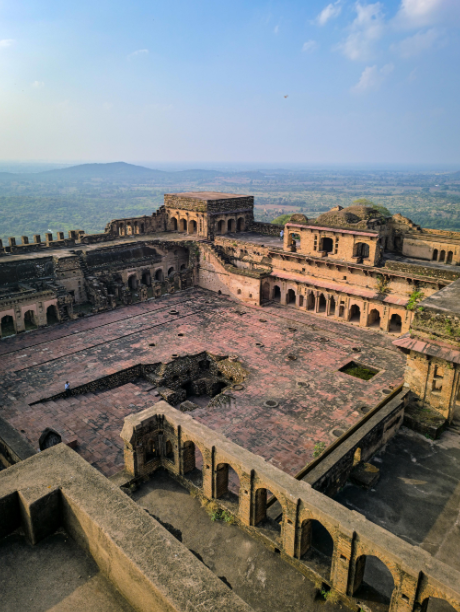
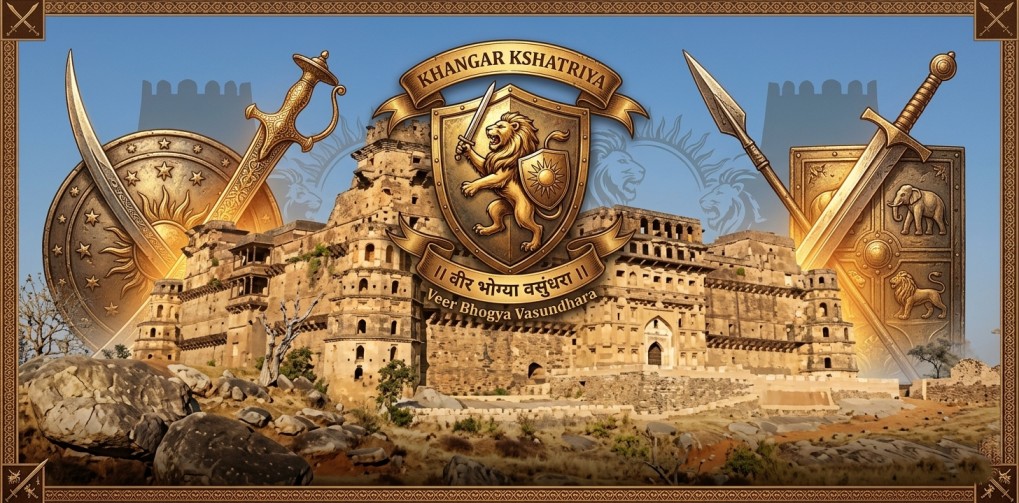
Documented Fact: Under the leadership of Maharaja Khet Singh Khangar, the fragmented territories of the Bundelkhand region were consolidated into a unified state. In 1182 AD, he established his capital at Garh Kundar, a strategically perched fortress in modern-day Madhya Pradesh. The fort of Garh Kundar is celebrated for its defensive design, featuring a five-story structure with two levels built underground to ensure security.
Traditional Account: A significant literary reference to this era exists in the Prithviraj Raso, a heroic ballad attributed to Chand Bardai. In this text, Khet Singh Khangar is portrayed as a trusted noble serving as a deputy commander and a close confidant of Emperor Prithviraj Chauhan. Following the Battle of Mahoba in 1182 AD, he was entrusted with the governance of Bundelkhand, which laid the foundation for the sovereign dynasty.
Sovereignty, Statecraft, and Historical Fortresses
Documented Fact: The dynasty established by these rulers endured in Bundelkhand for nearly two centuries. During this period, they ruled over several strategic strongholds and fortresses, including Mahoba, Chanderi, Kalpi, Hamirpur, and Kalinjar. Their governance was marked by both military defense and civic administration. Historical records show they constructed extensive water reservoirs, promoted agriculture, and secured vital trade routes to bring prosperity to the region. They also provided religious patronage, as seen in the construction of the Gajanan Mata (Chandika Bhavani) temple at Garh Kundar. The established political lineage of the dynasty is further documented through the succession of rulers such as Nand (Bhuwan Singh) and Khub Singh.
Martial Roles and Regional Footprint
Documented Fact: Beyond Bundelkhand, members of the community held significant military and administrative positions in other regions. In Saurashtra, they served in hereditary positions as Durgpal (Fort Guardian) and Kotwal (Garrison Commander). Notably, they served as protectors (Rakshaks) during the defense of the historic Somnath temple. Centuries later, they continued to uphold their traditional warrior roles by participating in the First War of Independence in 1857.
Inference: Although British-era census systems later categorized various communities based on temporary social roles rather than their dynastic origins, the physical evidence of their sovereignty, such as fortresses, temples, and documented genealogies , points to an enduring and unbroken Kshatriya identity that survived administrative reclassifications.
Documented Fact: Today, the Khangar community is spread across several Indian states, including Madhya Pradesh, Uttar Pradesh, Rajasthan, Gujarat, and Delhi. The Bundelkhand region specifically districts like Jhansi, Niwari, Tikamgarh, Hamirpur, and Lalitpur remains the primary cultural and historical center of the community, where their heritage continues to be preserved and celebrated.
Comments 0