The Khangar Question: Tracing a Warrior Lineage Through History
One of the most frequently asked questions about the Khangar community is whether they are Rajputs. The answer does not lie in modern classifications or colonial-era labels, but in documented medieval history that speaks through lineage, literature, and legacy.
The Khangar–Kshatriya Identity
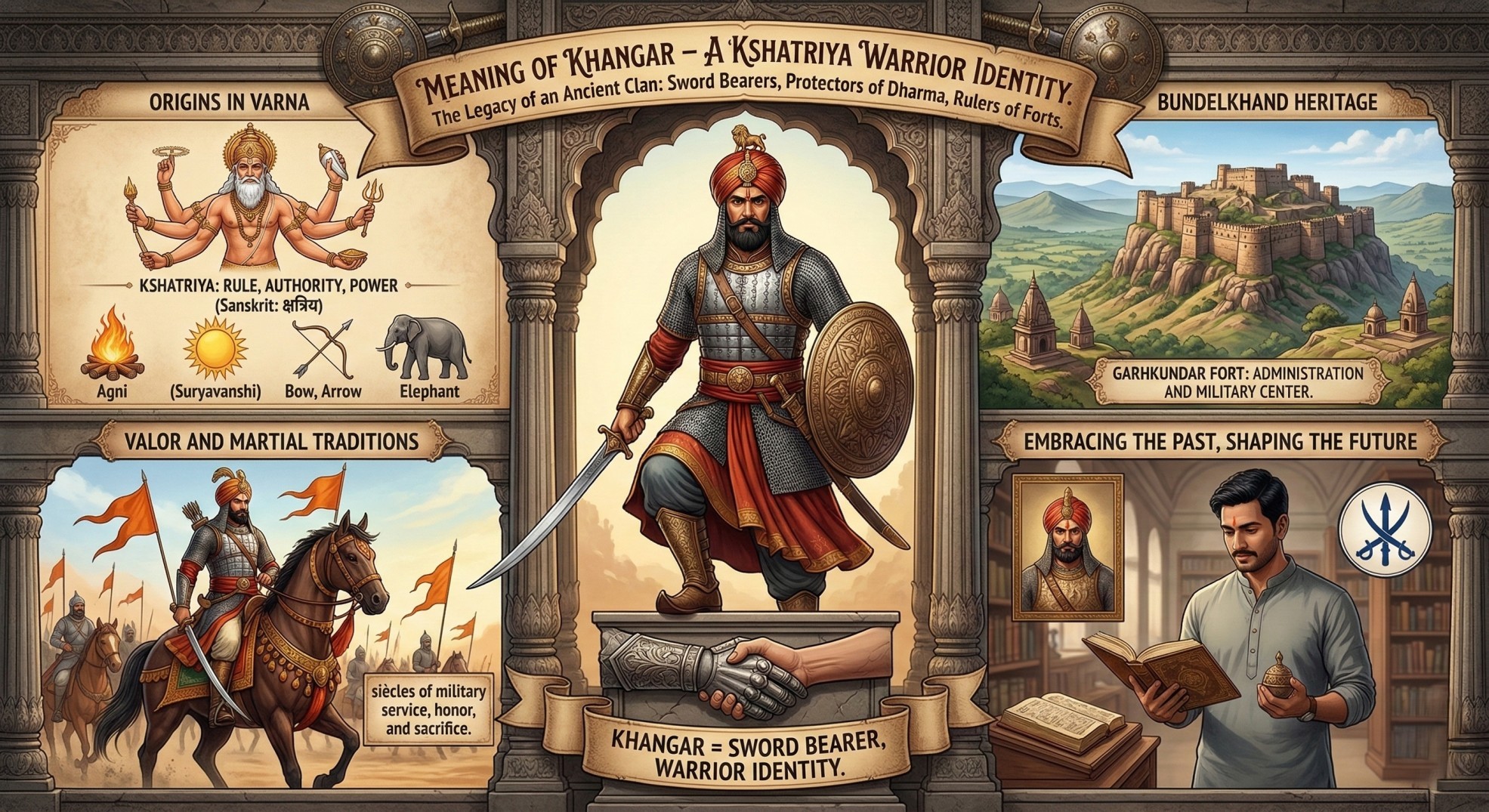
The Khangar community is recognized in historical tradition as a Kshatriya warrior clan. Even the name “Khangar” reflects this martial identity, derived from the Sanskrit words Khadga (sword) and Dhara (bearer), meaning “Sword-Bearers.” Such a title has long been associated with warrior lineages entrusted with defense, governance, and sovereignty.
Understanding whether Khangars are Rajputs requires stepping beyond later administrative categorizations and examining primary historical narratives and genealogical continuity.
A Royal Lineage Rooted in Western India
Historical traditions connect the Khangars to the Chudasama dynasty of Junagadh in present-day Gujarat considered one of the prominent ruling houses of western India. The Chudasamas are described as Chandravanshi (Lunar lineage) Kshatriyas, tracing their ancestry to Lord Krishna.
The genealogical chain, as preserved in traditional accounts, follows this sequence:
lineage of Lord Krishna → Chudasama rulers of Junagadh → Ra Kawat II (r. 1140–1152 AD) → Maharaja Khet Singh Khangar (born 1140 AD) → Khangar rulers of Garh Kundar (Bundelkhand) → Present-day Khangar Kshatriya community
Khet Singh and the Court of Prithviraj
A significant literary reference to the Khangars appears in the Prithviraj Raso, a heroic ballad attributed to Chand Bardai. In this narrative, Khet Singh Khangar is portrayed not as a common soldier, but as a trusted noble serving as a deputy fort commander and a close confidant of Emperor Prithviraj Chauhan.
Such positions were typically reserved for high-born Kshatriya elites within royal courts. The text further notes that following the Battle of Mahoba in 1182 AD, Khet Singh was entrusted with the governance of Bundelkhand an act suggesting political trust and recognition of noble standing.
Statecraft and Sovereignty
The historical footprint of the Khangars is reflected in their contributions to state-building and governance:
Kingdom Formation: The Khangars established a regional kingdom that endured for nearly two centuries, with influence over strategic centers such as Garh Kundar, Mahoba, Chanderi, Kalpi, and Hamirpur.
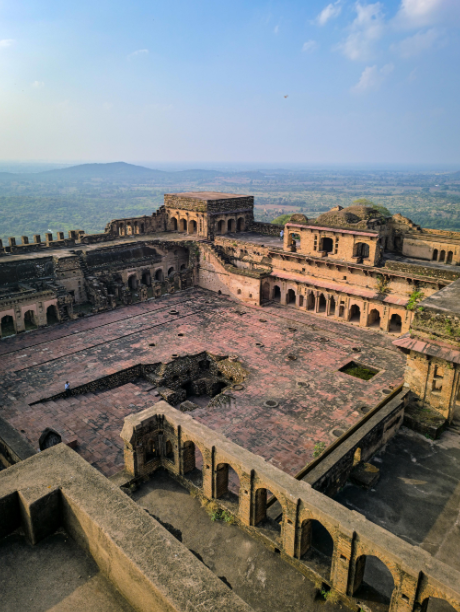
Architectural Legacy: The fort of Garh Kundar stands as a notable structure, known for its multi-level design and defensive ingenuity.
Religious Patronage: Gajanan Mata (Chandika Bhavani) temple at Garh Kundar reflects the continuation of clan-based devi worship traditions, often associated with ruling dynasties.
Dynastic Continuity: Succession through rulers such as Nand (Bhuwan Singh) and Khub Singh indicates an established political lineage.
Distortion of History, Not Loss of Identity
The fall of the Khangar kingdom came through conflict and political upheaval during the medieval period. However, the loss of a kingdom does not erase Kshatriya identity.
In later centuries, external narratives and colonial classifications failed to recognize the historical sovereignty of the Khangars. British-era census systems categorized communities based on temporary social roles rather than their dynastic origins. Such classifications were administrative, not historical.
The Khangar identity, rooted in lineage, warfare, governance, and sovereignty, remained unchanged.
The Historical Verdict
The Khangars are not a community seeking recognition they are a documented Kshatriya dynasty with:
A clear and continuous royal genealogy
Recognition in classical historical literature
A legacy of kingdom-building and governance
Enduring symbols of sovereignty in forts, temples, and traditions
Their identity as Kshatriyas is established through history, not defined by later misclassification.
Conclusion
The Khangar Kshatriyas stand as a proud warrior lineage of India, defined by their sword, their sovereignty, and their unbroken heritage. Their past is not a matter of debate it is a matter of record.
The truth is simple and enduring:
The Khangars are Kshatriyas.
They have always been Kshatriyas.
And their legacy continues as Kshatriyas.
Comments 0