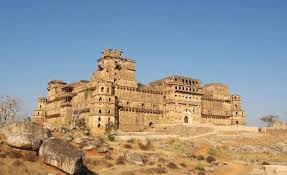
Jujhautikhand (also written as Jijotikhand) was a historic and powerful region in medieval India, corresponding largely to present-day Bundelkhand. It is remembered as a land of Kshatriya bravery, independence, and organized rule, strongly associated with the Khangar Kshatriya dynasty.
The foundation of Jujhautikhand as a political entity is credited to Maharaja Khetsingh Khangar in the late 12th century. After being appointed ruler following major military victories, he established his authority over the region and chose Garhkundar as the capital. This marked the rise of a stable and structured Kshatriya state in Bundelkhand.
Jujhautikhand emerged during a period of major political change in North India. After the fall of Prithviraj Chauhan in 1192 CE, when foreign powers began to dominate Delhi, Maharaja Khetsingh ensured that this region remained under independent Hindu rule. This decision preserved sovereignty and protected the cultural and political identity of the land.
Under Khangar rule, Jujhautikhand developed as a fort-based defensive region, with strongholds like Garhkundar playing a central role in governance and security. The rulers maintained order, protected their territories, and upheld Kshatriya traditions of duty and courage.
The Khangar dynasty continued to rule Jujhautikhand for nearly 165 years (1182–1347 CE) through successive rulers including Raja Nandpal, Raja Chhatrapal Singh, Raja Khubsingh, and Raja Mansingh. This long period of governance reflects the strength and continuity of their administration.
Jujhautikhand is also remembered in traditional verses that highlight its spirit:
As steadfast as the mountains stood their pride,
As deep as the ocean flowed their bonds and loyalty.
Their prosperity shone like the finest of realms,
Their resolve unyielding, like the eternal pole star.They did not measure life in victory or defeat,
But in courage, in sacrifice, in honor.
Glory to the sacred land of Jujhauti
Where warriors lived with valor, and embraced death with dignity
The decline of Jujhautikhand came in the 14th century during the expansion of the Delhi Sultanate. However, its legacy remains deeply rooted in the history of Bundelkhand.
Today, Jujhautikhand stands as a symbol of Kshatriya resilience, self-rule, and the enduring legacy of the Khangar rulers, who shaped the identity of the region with courage and determination.
Comments 0