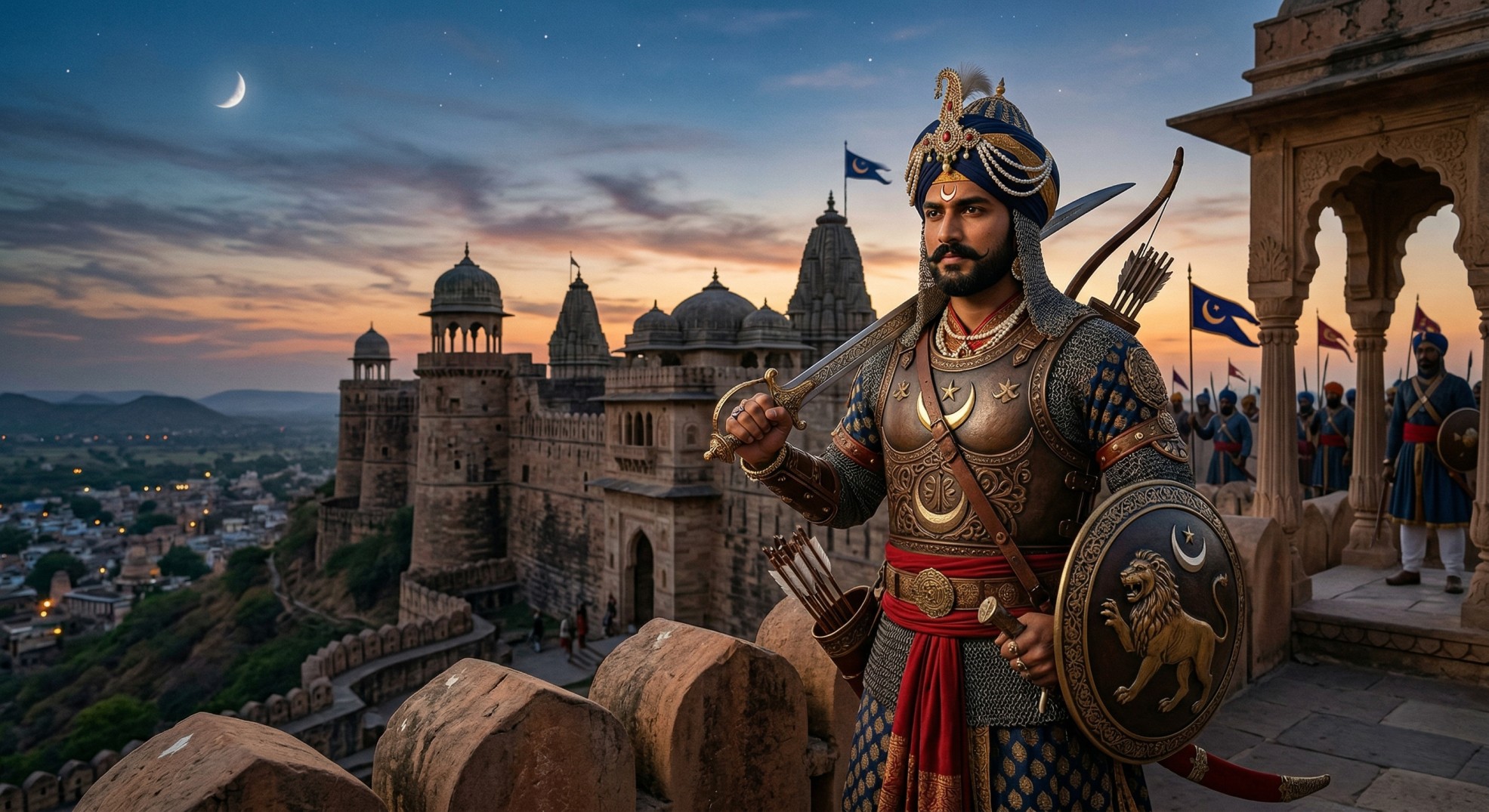
The Khangar Kshatriya Samaj is one of India's distinguished Kshatriya clans whose lineage traces directly to the Chandravansh — the Lunar Dynasty. The Chandravansh is the royal line in which Lord Shri Krishna himself was born. This stream, flowing from the clan, reaches the powerful Chudasama dynasty of Saurashtra (Gujarat), and it is from the Chudasama royal house that the Khangar Kshatriya Samaj descends.
The Chandravansh: The Most Ancient Royal Kshatriya Line
In the Indian Kshatriya tradition, two great royal lines are recognized — the Suryavansh (Solar Dynasty) and the Chandravansh (Lunar Dynasty). The Chandravansh was established through Budh, son of Chandra (the Moon), and Ila. In this lineage were born King Yayati, King Yadu, and their descendants the s. Lord Shri Krishna was the supreme figure of this clan. To be a Chandravanshi Kshatriya means that the Khangar community's ancestral line connects to the most ancient and most revered royal tradition of Bharat.
The Chudasama Dynasty: The Lions of Saurashtra
A branch of the Chandravanshi s established their kingdom on the Saurashtra peninsula (modern Kathiawar, Gujarat). These were the Chudasamas — who ruled from the renowned Uparkot fortress at Junagadh from approximately the 9th century to the 15th century. The Chudasama kings were celebrated for their indomitable valor. They repeatedly confronted the mighty Chaulukya (Solanki) rulers of Anhilwara Patan and defended the sovereignty of Saurashtra.
Some of the prominent Chudasama rulers:
Ra Graharipu — The founder of the Chudasama state, who laid the foundation of Chudasama authority at Junagadh.
Ra Khengar II (r. 1098–1125 AD) — The most valiant king in Chudasama history. His courage and the saga of Ranakdevi are still sung across Gujarat. His final battle against Siddharaj Jaisinh stands as an enduring symbol of Rajput valor.
Ra Noghan III (r. 1125–1140 AD) — The resolute ruler who restored the shattered Chudasama kingdom after the Solanki invasion.
Ra Kawat II (r. 1140–1152 AD) — King of Junagadh, and the father of Maharaja Khet Singh Khangar, founder of the Khangar dynasty. His name is preserved in the Vahivancha (bardic genealogist) records of the Khangar community as "Raja Katav-2."
From Chudasama to Khangar: The Flow of the Royal Line
Ra Kawat II died in 1152 AD. At that time, his son Khet Singh was only 12 years old. The throne of Junagadh passed to another senior prince, Ra Jayasimha. In the Rajput tradition, princes who did not inherit the throne would venture to other kingdoms and establish new domains through their valor. Young Khet Singh chose this path. He left Saurashtra, traveled northward, and arrived at the court of Prithviraj Chauhan at Ajmer, where his Chudasama- lineage earned him a position of honor.
Khet Singh went on to establish an independent Khangar kingdom with Garh Kundar in Bundelkhand as his capital. His descendants ruled this region for nearly two hundred years. The present-day Khangar Kshatriya Samaj traces its ancestry to these very rulers.
Khangar Kshatriya Lineage (Summary):
Lord Shri Krishna ( Clan, Chandravansh)
→ Branches of the Dynasty
→ Chudasama Dynasty (Junagadh, Saurashtra)
→ Ra Khengar II
→ Ra Noghan III
→ Ra Kawat II + Rani Kishore Kunwar Bai
→ Maharaja Khet Singh Khangar (b. 1140 AD, Founder of Garh Kundar)
→ Khangar Dynasty (Bundelkhand)
→ Present-day Khangar Kshatriya Samaj
Authenticity of Sources
The Chandravanshi-Chudasama origin of the Khangar Kshatriyas is confirmed by multiple sources. The Prithviraj Raso (by Chand Bardai) mentions Khet Singh as a trusted general and high-born warrior of Prithviraj Chauhan. The Alha Khand (by Jagnik) records Khet Singh's conquest of Bundelkhand. The established genealogical list of the Chudasama dynasty records the reign of Ra Kawat II as 1140–1152 AD, which aligns precisely with Khet Singh's birth date of 1140 AD. The Vahivancha bardic records of the Khangar community have preserved this complete genealogy for eight centuries. Additionally, the book "Bundelkhand Mein Khangar Rajya" by Ram Autar Singh Khangar provides detailed documentation of this history.
This lineage is not based on conjecture — it is an authenticated Kshatriya heritage founded on historical dates, established dynastic records, and centuries-old bardic traditions.